

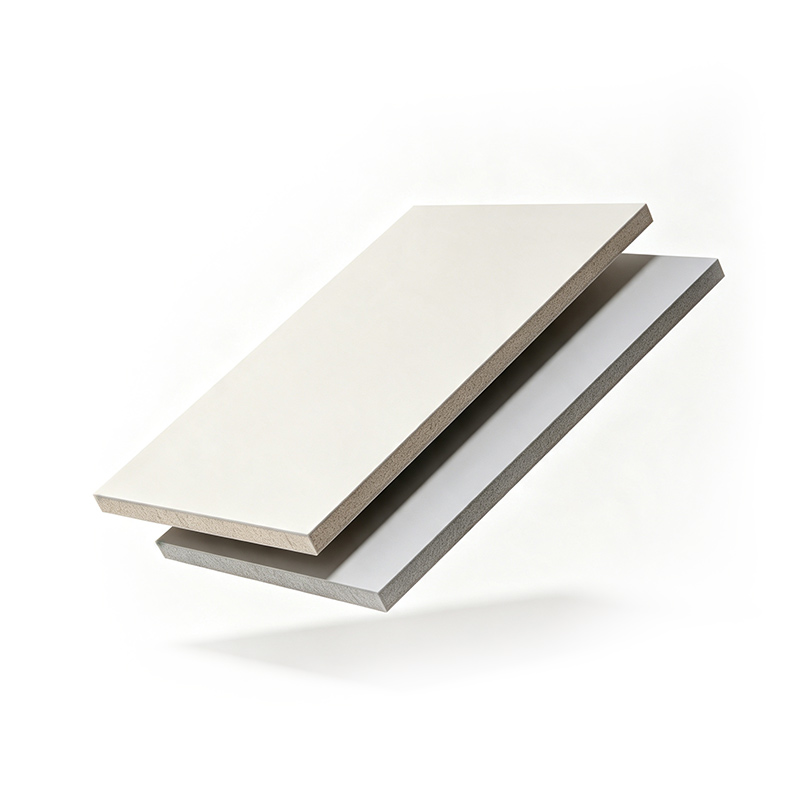


Fire Door Core Solution
Fire Door Core Solution
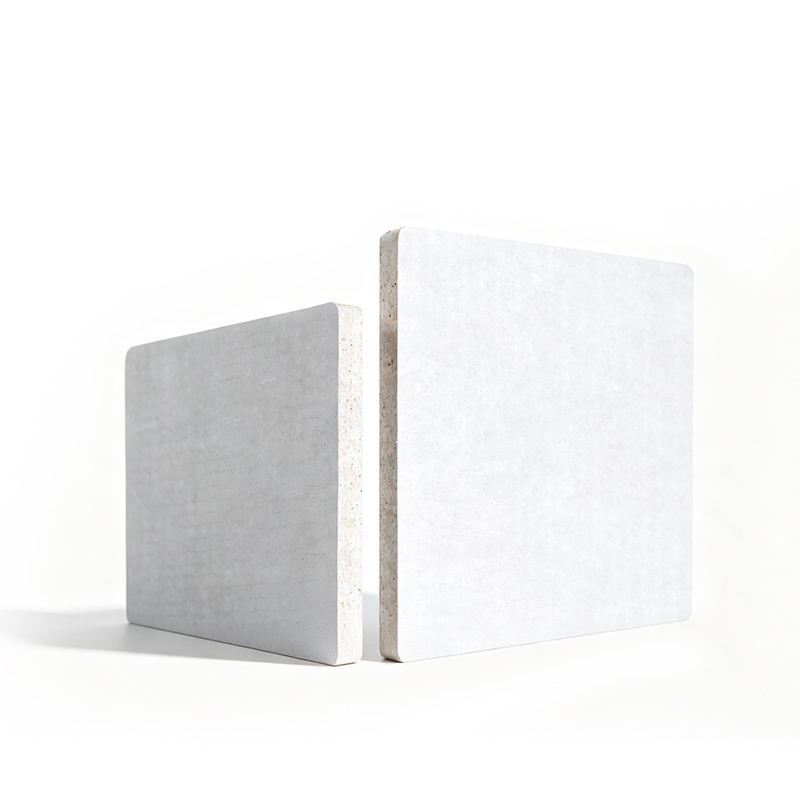
This fire door core solution uses a chloride-free sulfate MgO board as a fire door core board inside door leaves. It serves as the core layer, a reinforcement layer or an inner lining, depending on door type and leaf construction, and it is supplied as a mineral core for fire doors rather than as a finished door.
The board is A1 non-combustible with chloride ion content of no more than 0.01%, formaldehyde-free and asbestos-free. An A1 panel classification does not certify a complete door — EI30, EI60 and EI90 targets are proven on the complete door assembly, so confirm door type, door leaf thickness and board position before specifying the core. Start from the fire door core board product page for the board data.
Solution Configurations by Application
| Application | Configuration principle |
|---|---|
| Door-leaf core layer | Select by door type, leaf construction and target thickness; confirm bonding, pressing and lamination. No single fixed thickness applies to every door. |
| Reinforcement or inner lining | Coordinate board position and machining with face material, hardware layout and local openings so the core and lining combination works as one leaf. |
| Custom door-core composition | Confirm against the sample-door construction, fire target and applicable standard; never substitute panel classification for complete-door validation. |
Suitable Projects and Buyers
This solution is intended for fire-door manufacturers, door-core laminators, building-material buyers and distributors developing door products.
It explains the role of magnesium sulfate board within the door leaf and makes clear that an A1 panel does not by itself certify the complete door. Fire door core, door leaf lining and steel door reinforcement each carry different thickness, bonding and hardware requirements.
For adjacent applications, see the fire-rated interior lining solution.
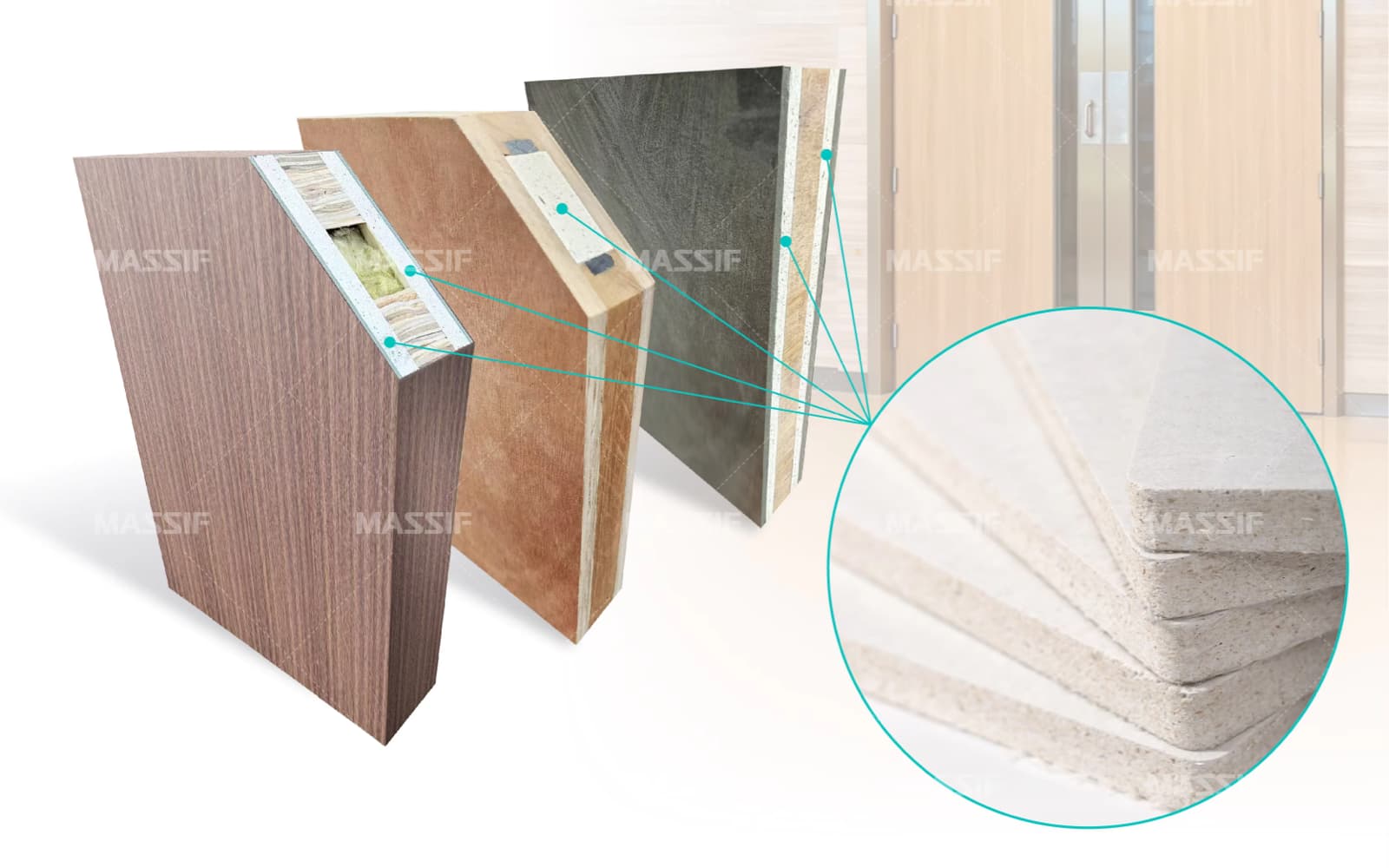
Selection Path by Door Type and Leaf Construction
Start from the door type. A steel door, a timber door and a mineral core door impose different leaf construction, edge detail and hardware requirements — door type is the first input, not the last.
Then fix the board position inside the leaf. Core layer, reinforcement or inner lining each change the required thickness, machining and bonding method.
Then coordinate door leaf thickness with door hardware. Total leaf thickness, lock and hinge positions, openings and edge machining must be fixed before the core is specified; hardware loads transfer to the leaf construction, not to the board alone.
Panel classification never replaces complete-door validation. EI30, EI60 and EI90 targets are established on the complete door assembly under the applicable standard — the A1 classification of the board is a material property, not a door rating.
Common Project Questions
Will the board act as a core, reinforcement or inner lining?
How should board thickness coordinate with door leaf thickness, hardware and finish?
Can panel test documents replace complete-door testing?
How is an EI30 / EI60 / EI90 target established for the complete door?
What changes when the core and lining combination is customized?
Shared Value and Use Boundaries
A1 Non-Combustibility
A1 non-combustible material classification for enhanced building safety. It classifies the panel, not the fire-resistance period of the complete door.
Ultra-Low Chloride Content (≤0.01%)
Low chloride ion content supports corrosion resistance around hardware and long-term durability in door constructions.
Formaldehyde-Free and Asbestos-Free
Healthier indoor air quality with safe handling during fabrication and machining.
Versatile Core Application
Suitable as fire door core, reinforcement or door leaf lining within fire-door leaves, subject to the confirmed model.
Information Required for Project Selection
Door type, total leaf thickness and board position
Door type, total door leaf thickness and whether the board acts as core, reinforcement or inner lining.
Target fire requirement and applicable standard
The EI30, EI60 or EI90 target and the applicable standard for the complete door.
Face material, bonding process and pressing conditions
Face material, bonding process, pressing conditions and the core and lining combination.
Hardware layout, openings and edge machining
Door hardware reinforcement, openings, cutting and edge-machining requirements.
Products Applied In This Project
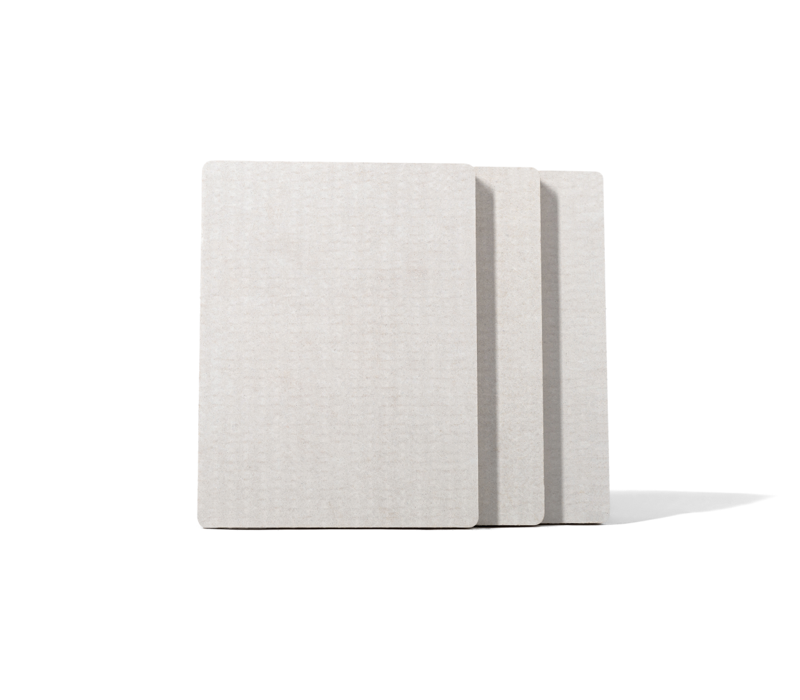
Fire-Rated Sulfate MgO Board for Fire Door Core
A1 non-combustible fire door core board for the door-leaf core layer and custom core composition.
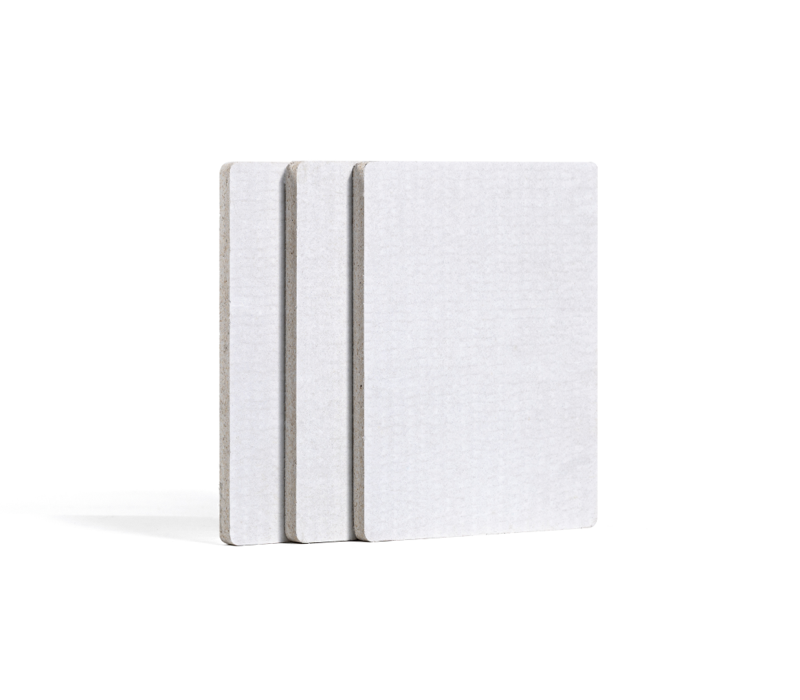
Chloride-Free Sulfate MgO Board for Partition Lining
A1 non-combustible lining board, 5–18 mm, for thin door leaf lining and reinforcement layers.
Related Reading
Can an A1 panel prove the fire rating of the complete door? — why panel classification and complete-door validation are two different things.
Is there one fixed thickness for fire door core board? — how door type and leaf construction drive the core thickness.
Basic Quality Evidence
Test reports, certificates and production evidence shown externally should correspond to the actual product model, specification and test conditions. This fire door core solution page provides basic evidence and does not use unrelated certificates to infer complete-system performance.
With the currently available materials, evidence of real production, finished-product inspection and principal certificates is sufficient. Detailed test data can remain on the relevant product or quality-certification page.
FAQ
Send Your Fire Door Core Requirements
Share the door type, total door leaf thickness, board position, target fire requirement and hardware layout — our team will confirm the core board and door-core composition details. Contact Massif or browse the FAQs.