

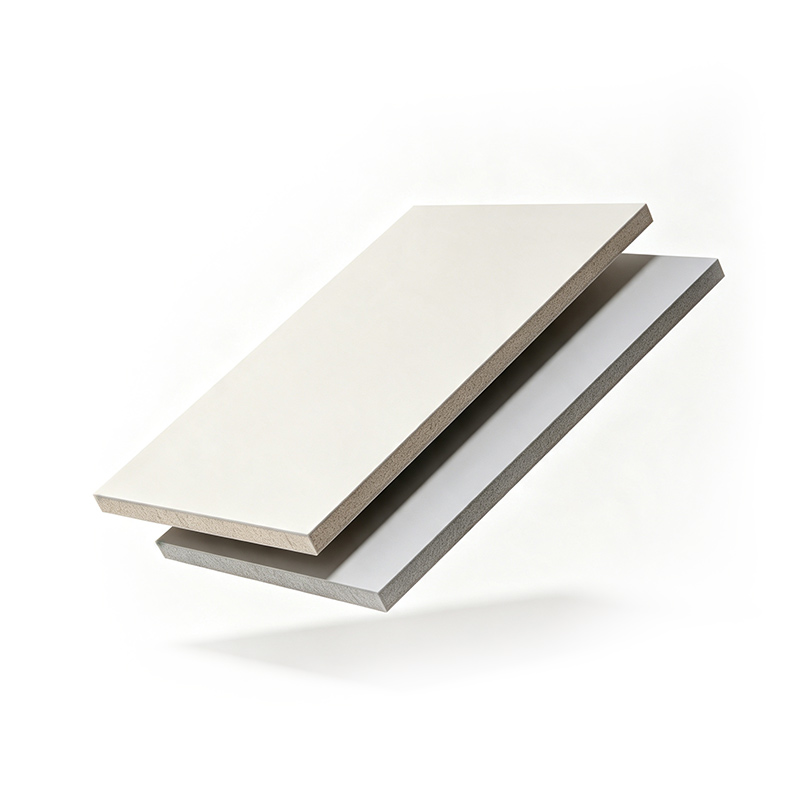



Fire-Rated Sulfate MgO Board for Fire Door Cores Guide
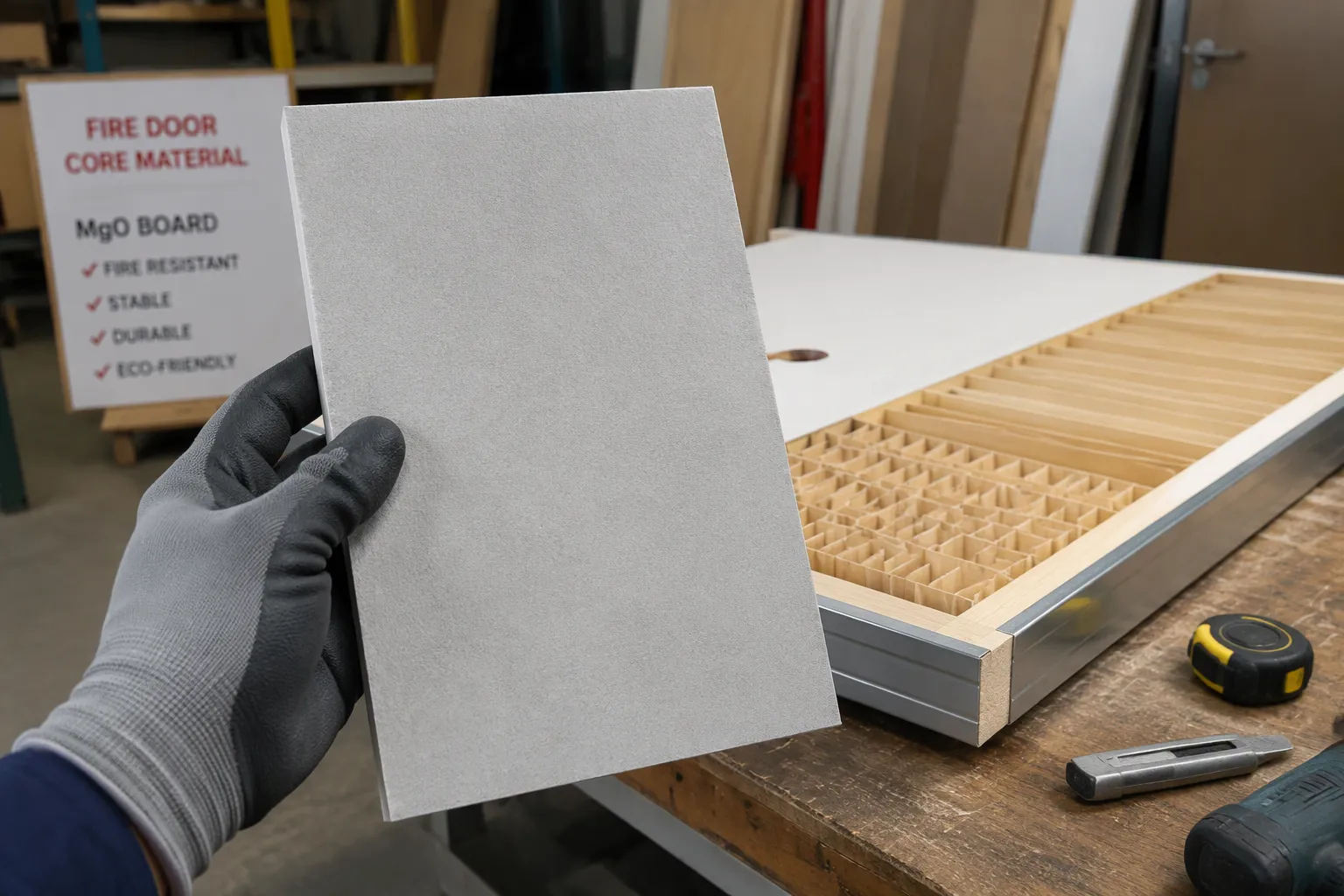
Fire resistance ratings, density, thickness, and strength dictate whether an MgO board is suitable for fire door cores. Compatibility, compliance, and installed cost determine if it is the right choice for your project. At Jiangsu Massif, we know that buyers comparing core options or validating a magnesium oxide board supplier need a reliable checklist before ordering. This guide provides specification benchmarks and selection criteria, section by section. You will see how fire resistance behaves in tested assemblies, which specifications matter for specific leaf designs, and where our sulfate MgO boards outperform traditional alternatives. Compare your options with these criteria and verify every fire rating against system test data.
Key Takeaways
Fire ratings apply to the complete door assembly, but the core board is the backbone of that performance.
Sulfate MgO boards eliminate the risk of "sweating" and hardware corrosion caused by traditional chloride boards.
Match board density, thickness, and screw-holding strength to your specific door design and hardware loads.
Always request full fire test reports with batch traceability, not just summary certificates.
Evaluate the total installed cost (fabrication, scrap, fasteners) rather than just the raw material price.
MgO Board for Fire Door Cores: Core Specs
Fire Resistance and Thermal Performance
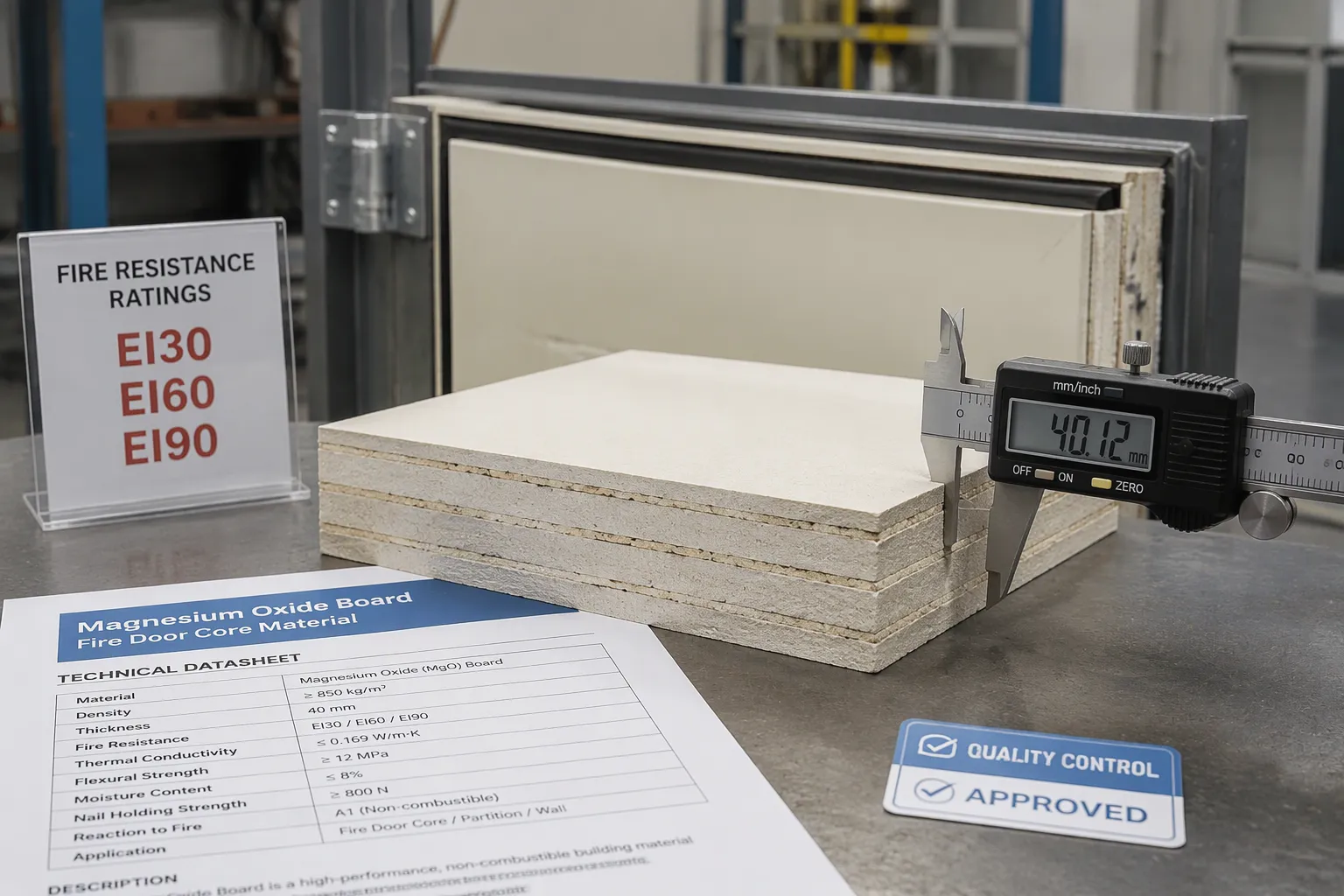
Fire resistance is a property of the complete door assembly. An magnesium oxide board supports target ratings such as EI30, EI60, and EI90 only when a full-size leaf, frame, facing, hardware, and seals pass a system test together. While a board datasheet alone cannot confirm a fire rating, the core material acts as the thermal and structural backbone during a fire event. Massif’s boards provide exceptional thermal insulation and maintain structural integrity at extreme temperatures, preventing the door leaf from warping or collapsing prematurely.
At the material level, our boards carry a Reaction to Fire Class A1 classification (non-combustible). Treat each fire rating as model-specific and confirm it against test data for the exact assembly you plan to build.
Density, Thickness, and Strength
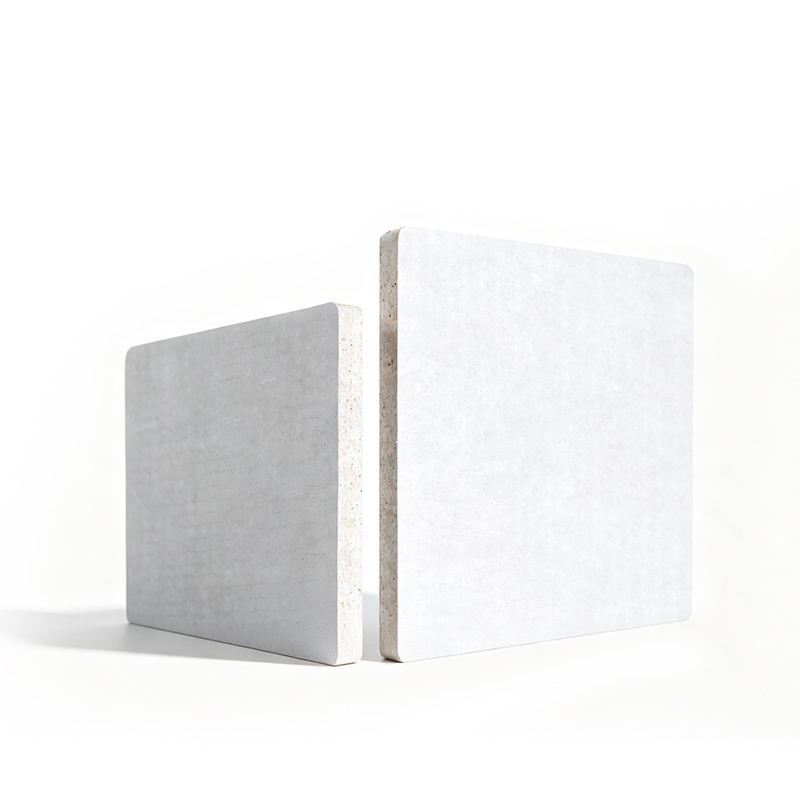
Thickness and density set the mechanical limits of a fire-rated door core. Standard panel thicknesses run from 3 mm to 50 mm, with 6 mm, 9 mm, and 12 mm as the most common options. Standard panel sizes are 1220 × 2440 mm. The table below outlines typical door core panel formats.
Door Core Type | Size | Thickness |
|---|---|---|
Wooden Door Board | 1220*2440mm | 5mm / 6mm |
Metal Door Board | 900*2100mm | 38-58mm |
Density and compressive strength are critical for screw-holding capacity and leaf rigidity. Fire doors are heavy, and hinges exert immense continuous stress. A denser fire-resistant MgO board grips fasteners more firmly, preventing screw pull-out over years of operation. Massif boards offer a flexural strength of 15 N/mm² and impact strength of 8.4 KJ/m², providing a reliable reference point for structural integrity.
Property | Value |
|---|---|
Flexural Strength | 15 N/mm² |
Impact Strength | 8.4 KJ/m² |
Compression / Tension / Flexural | up to 15 MPa |
A thicker core board raises stiffness and fire resistance but adds weight. A thinner panel saves mass but demands precise fastener spacing. Match density and thickness to your leaf design, then verify the combination in a tested assembly.
Fit in Fire-Rated Assemblies
Why Sulfate MgO Board is Critical (Avoiding Corrosion)
Traditional chloride-based MgO boards are notorious for moisture absorption, leading to "sweating" (efflorescence) and the severe corrosion of metal hinges, locks, and concealed closers. Massif’s Sulfate MgO Board completely eliminates this risk. By utilizing an advanced magnesium sulfate system with a chloride ion content of ≤0.01%, our boards guarantee long-term dimensional stability and protect expensive fire-door hardware from rust and degradation, even in high-humidity environments.
Parameter | Massif Sulfate System Value |
|---|---|
Chloride Ion Content | ≤0.01% |
System Type | Low-chloride magnesium-sulfate system |
Corrosion Benefit | Eliminates chloride-related rust around fixings, frames, and concealed hardware |
Compatibility and Workability
The panel acts as a core layer or internal lining within a broader system. At Massif, we engineer our boards to integrate seamlessly with the door leaf, frame, facing, adhesive, hardware, and perimeter seals. Hinge and closer loads must transfer properly to the framing or internal reinforcement.
Fabrication choices heavily affect labor and final quality. Our sulfate MgO boards feature a consistent density that allows for excellent workability. They are highly suitable for CNC routing and milling (essential for mortising concealed closers) without excessive chipping or delamination. Furthermore, the uniform matrix minimizes premature wear on saw blades and routing bits compared to highly abrasive alternative cores.
Adhesive selection matters in fire-door applications. The bonding process must suit the facing material and the validated assembly. Every MgO board in fire-rated assemblies carries a fire rating only as part of the tested door. Confirm assembly evidence before fabrication begins.
Fire Resistance Ratings and Compliance
Test Standards and Certification
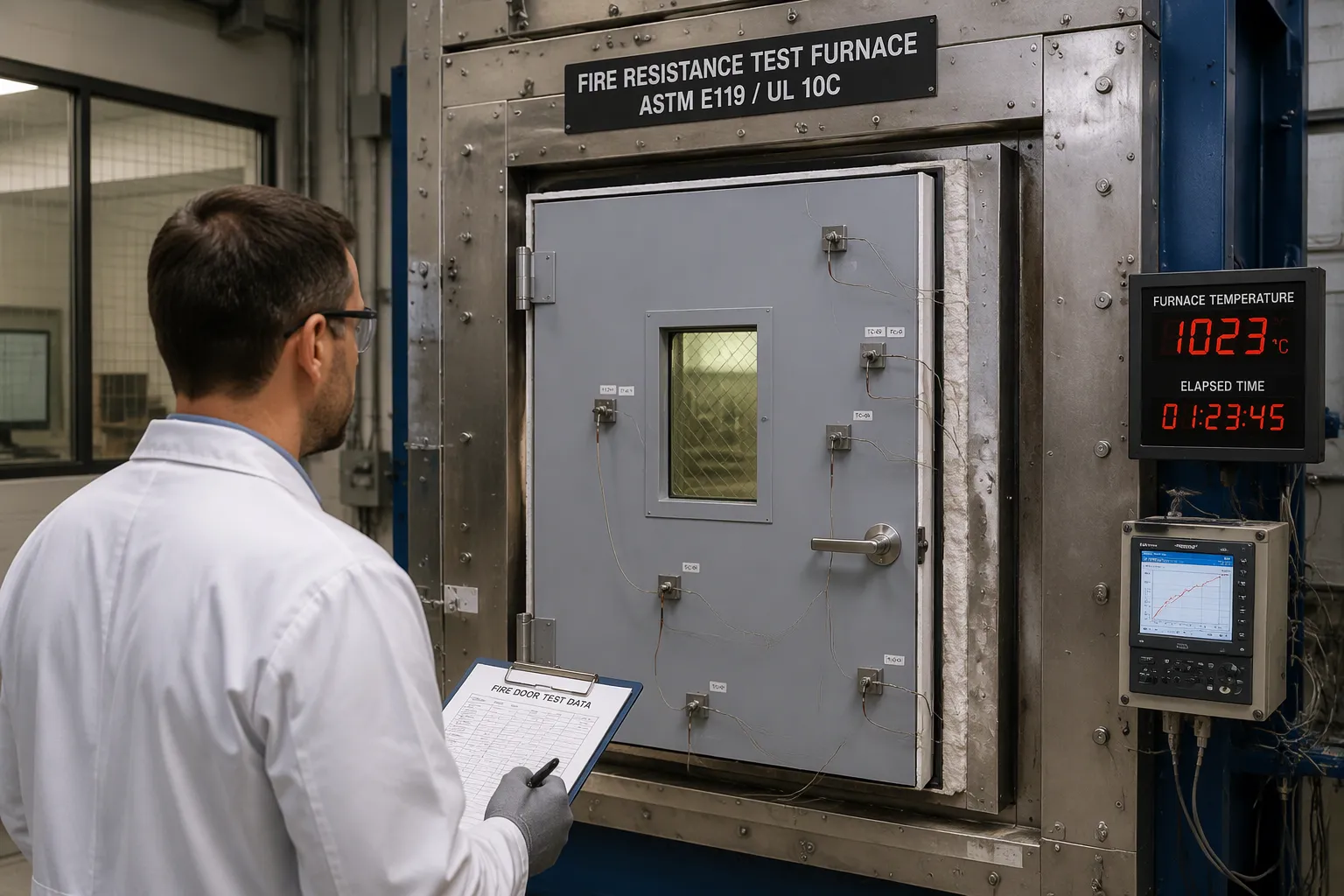
A fire rating means little without a named test standard. Fire resistance ratings for door assemblies must be tied to system testing under recognized methods. The table below highlights the main regional standards.
Standard | Region / Test Condition |
|---|---|
EN 1634-1 | EU |
UL 10C (positive pressure) | US |
GB 12955 | China |
The rating class and the test pressure regime must both match the local building code. A 60-minute neutral-pressure door is not equivalent to a 60-minute UL 10C positive-pressure door for stairwell pressurization.
Magnesium-oxide (MgO) board cores are the mainstream standard for 90-120 min export builds — non-combustible, moisture-stable, and fully compatible with concealed-closer mortises. Decision rule: pick honeycomb for budget 30-min risers, mineral wool for 60-min corridors, and Sulfate MgO or perlite for 90-120 min or any wet-area install.
Board-level reaction to fire is a separate metric. ASTM E84 Class A and EN 13501-1 A1 describe how the panel itself behaves. Massif boards consistently achieve A1 under EN 13501-1 and record a Flame Spread Index of 0 and Smoke Developed Index of 0 under ASTM E84, ensuring the core material will not contribute to fire load or smoke toxicity.
Documentation and Traceability
Performance data is model-specific. The finished door must be evaluated as a whole assembly. To ensure project success, the Massif technical team recommends verifying the following before approving a shipment:
Ensure the testing lab holds recognized accreditation (e.g., IAS, UKAS, UL).
Read flexural strength and density values at the exact thickness you are ordering.
Verify the fire rating covers the full assembly build-up, not just the bare board.
Request complete fire test documents with batch traceability.
Confirm the report names the specific product, thickness, and formulation (e.g., Sulfate vs. Chloride).
A technical datasheet should match the tested product: thickness, density, surface treatment, and edge type. A formal fire classification is not a substitute for product-specific testing of the full build-up. Always ask whether the board uses a chloride-based or non-chloride sulfate system, and request batch records. For North American projects, ICC-ES evaluations and physical samples round out the compliance package.
Cost Factors and Value Comparison
Purchase Price vs. Installed Cost
Purchase price is only the first line of the budget. Installed cost includes fabrication time, adhesive requirements, tool wear, and scrap rates. Thicker, high-density panels cost more upfront and raise freight charges, but they may drastically reduce scrap on complex leaves with multiple cutouts. A low unit price with high scrap and frequent blade changes can ultimately cost more than a premium panel that cuts cleanly and holds screws perfectly. Ask suppliers for cut plans and yield data before comparing quotes.
MgO vs. Alternative Core Materials
Each core type fits a different application. Honeycomb suits budget 30-minute risers. Mineral wool fits 60-minute corridors. Expanded perlite serves 90–120 minute builds. However, Magnesium Oxide board brings unmatched non-combustible behavior, moisture stability, and screw-holding strength to fire-rated assemblies. Combined with our low chloride sulfate formulation, Massif boards remain formaldehyde-free, asbestos-free, and safe for metal hardware. Let the fire resistance target, leaf design, and hardware requirements dictate your choice.
The decision path follows a fixed order. Confirm fire resistance ratings first. Match density and strength to the door design next. Verify compatibility (especially regarding hardware corrosion) after that. Weigh installed cost against alternative cores last.
Confirm the fire rating and its test documentation.
Match density, thickness, and screw-holding strength to the leaf.
Verify compatibility (Sulfate system for hardware protection) and installation needs.
Compare installed cost across core options.
A specification checklist turns a complex purchase into a verifiable one. An MgO board for fire door cores fits best where its fire, moisture, and structural performance align with the door system's demands.
FAQ
Does an MgO board carry a fire rating on its own?
No. A fire rating belongs to the complete tested assembly. The MgO board for fire door cores acts as the structural and thermal backbone, supporting targets such as EI30, EI60, and EI90 only when the full leaf, frame, and hardware pass a system test together.
Why is a Sulfate MgO board better than traditional boards for fire doors?
Traditional chloride boards absorb moisture and cause severe rust to hinges and locks. Massif’s Sulfate MgO board features a chloride ion content of ≤0.01%, completely eliminating the risk of "sweating" and protecting your expensive door hardware over decades of use.
Which standards should test reports cite?
Fire resistance must be tied to system testing under recognized methods such as EN 1634-1, UL 10C, and GB 12955. Board-level reaction to fire appears under ASTM E84 Class A or EN 13501-1 A1.
Can MgO boards be routed for concealed door closers?
Yes. Massif boards are engineered with consistent density, making them highly suitable for CNC routing and milling for mortises without excessive chipping, delamination, or premature tool wear.
How do MgO boards compare with other cores on cost?
Compare installed cost, not just sticker price. While slightly more expensive than basic honeycomb, MgO boards drastically reduce scrap, offer superior screw-holding for heavy doors, and prevent costly hardware replacement due to corrosion, making them highly cost-effective for 90–120 minute builds.
Ready to Upgrade Your Fire Door Cores?
Stop worrying about hardware corrosion, sweating, and failed fire tests. Contact Jiangsu Massif today to request our Technical Data Sheets (TDS), full Fire Test Reports, and free samples of our premium Sulfate MgO Board.
Get a Quote & Free Sample